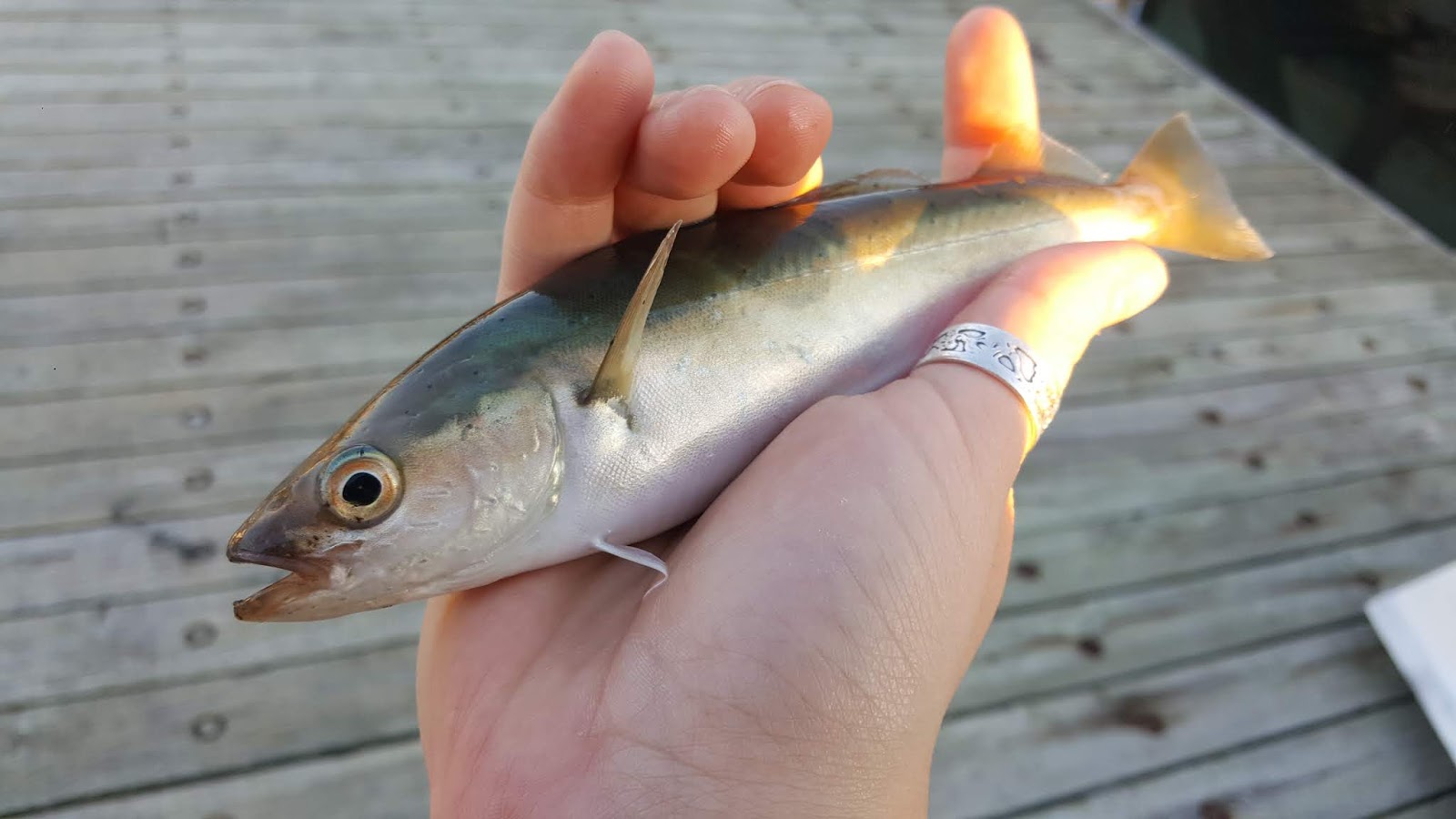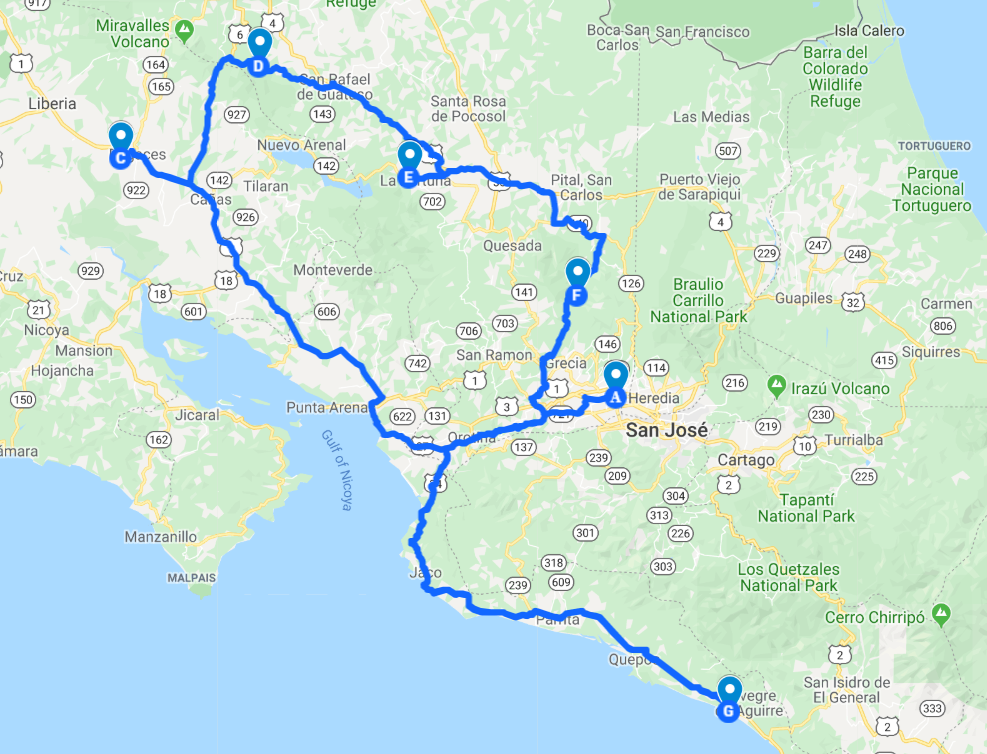
Day 1 involved a lot of flying, driving, and sleeping... your basic travel day. It did give us a chance to get used to the steep switchbacks in the CR mountains and find some cool critters at night. I saw my first monkey, tons of leafcutter ants, a giant crab spider, some tree frogs, giant toads, etc. Taking pictures was tough at night but I still managed some decent shots:
 |
| Giant Crab Spider |
 |
| Veined Tree Frog |
The next day would be our first full day of the trip! We got up at 5:30, had breakfast, and began heading north. The first stop was actually a fishing stop, which was perfect because seeing all the beautiful rivers and creeks on day 1 but not being able to fish them was driving me crazy. We found a spot at "el Gran Parqueo" and made our way down to the chosen location: Rio Ciruelas. It was a beautiful spot with a nice deep pool just downstream of the highway. Upon arriving, I saw a "Jesus" Lizard (Common Basilisk) run across the river; Alex manage to get a great picture!
 |
| Common Basilisk |
 |
| Rio Ciruelas Microfishing |
I tied a #0 Mepps onto my ultralight setup and made a cast. The hits were instant! It took a couple casts before I actually hooked up and caught my first lifer of the trip, some sort of Tetra. I would end up catching these all over the country and later identified them all as being Astyanax orstedii, with no common name. They also made for great bait which I used for the next few days until I found squid.
 |
| Astyanax orstedii |
A couple casts later and something much larger hit the lure, it put up quite a spirited fight with 4lb test but I finally landed it and saw some sort of Cichlid. This turned out to be the famed Guapote, one of the largest Cichlids in CR. I ended up catching a few more after switching to a jig.
 |
| Guapote |
After catching a bunch more Tetras and a few more Guapote, I switched my focus to some Livebearers, Gobies and smaller Cichlids I spotted in the shallows. Unfortunately, I was never able to get any of them to take the tanago hook. As I would later learn, many of the freshwater fish in CR have vegetarian diets and are unlikely to bite. We left the Rio Ciruelas after about a total of 1.5hrs of fishing.
We then continued heading north to the town of Bagaces where we looked for our hotel for the night. We found the Hotel el Greco which was clean and only cost about $30 for the night! Sidenote, we were told that many people spoke English in CR but this did not seem to be the case as soon as you left anywhere that wasn't extremely touristy. Luckily, Alex speaks decent Spanish and was able to figure everything out for us :)
I forgot to mention our rental car, a Toyota Rush. That thing was sick, small car with great gas mileage, 4WD, and great clearance.. I wish they sold them here! Anyway, after figuring things out at the hotel, we changed into our bathing suits and drove over to our first Costa Rican waterfall: Llanos de Cortez. Entry was $7 each and included a guarded parking lot with close access to the falls. The falls themselves were beautiful and had one of the best swimming areas of the ones we visited throughout the trip.

After a bit of swimming, we hiked up to the top of the waterfall for a better view and to search for a hidden pool I heard of online. We ended up finding not only the pool, but also a bunch of the Livebearers and Cichlids I was unable to catch at Rio Ciruelas. I rushed back to get my gear and try for them again. Of course, the vegetarian Livebearers remained uncatchable but I did manage one of the small Cichlids. Of course, it turned out to be thesame Convict Cichlid I had already caught in Florida :p EDIT: Turns out this is a new species, the Honduran Redpoint Cichlid! I also saw a nest of Executioner Wasps in the rainforest, rumoured to have one of the most painful stings in the Insect kingdom.
Alex and I had split up while I was fishing, and I could not find her for about 20min after returning to the fishing hole. Turns out she was only just out of sight, but it sure isn't fun to lose the only person you know in a foreign country where no one understands you! Anyway, after that whole debacle, we returned to Bagaces where we visited the supermarket for some local treats before cleaning up at the hotel and going back out to look for dinner. Costa Rica has these restaurants called "sodas" that are basically your small local restaurants. The main meal is called "cassados" and usually seems to consist of your choice of meat, rice, black beans, a salad, and plantains. We found Soda la Fuente on a slightly sketchy street but the waitress was friendly and the place looked clean. The food costs us less than $5 each and was delicious!
Dinner pretty well ended the night as we fell asleep soon after returning to the hotel to be ready for another early day. We rose at 5:30 again and continued heading north, this time to Rio Celeste. There was no fishing allowed in the park, but it was still totally worth the visit! The river has a beautiful blue colour caused by a chemical reaction between two smaller clear streams, and you can even hike to the point where the reaction occurs. There was also tons of wildlife, some small hanging bridges, and a huge waterfall.
The hike along Rio Celeste took us about 2.5hrs and we then drove to a section of the river just outside of the park where we could swim/fish in the blue water. I only caught Tetras and the water was pretty cold but some White-throated Capuchins came right up to us!

After finishing up the river, we began the drive to our next major destination: the town of la Fortuna. Along the way, we were treated to some spectacular views of the Arenal Volcano, better than any we'd see while much closer to the volcano.

Once in la Fortuna, we searched for our next hotel and settled on la Choza Inn. They had small, but clean, rooms, beautiful grounds, and free breakfast! All for $35! We also took a bit of time to explore the town and buy some fried plantain and ice cream.
The next activity was a dip in a river naturally heated by the volcano. Resorts all around took advantage of the natural hot springs but the river could be accessed for free at the right spots. We found the right location and enjoyed the hot water and jungle surroundings for a while. We then continued down the road past where the tourists go until we hit a river crossing where the car wouldn't make it across, and stopped at some fishing spots along the way. Unfortunately, nothing of interest came to hand but we still enjoyed our adventure and were treated to some nice views :)
That pretty well ended day 3, and brought us to the final day of our mini road trip. We rose extra early to have this cool swimming hole I had heard of to ourselves, called el Salto. I started by fishing at the spot because it looked so fishy, and was rewarded with one of my top targets for the trip: the Machaca. More specifically, the one I caught was a Machaca del Atlantico. They're a sort of river-dwelling version of a Piranha, but with teeth like a Pacu. After fishing, we also took time to use the rope swing, which was much higher than it looks.
After our exciting morning, we returned to the hotel for (free) breakfast and then headed to our first set of fishing spots for the day. I had found a promising river on iNat and noticed a few others nearby that also looked like they could be good. As it turns out, all of them were great! Beautiful clear water despite the agriculture in the area and nice deep pools right by the bridges :) I caught more Guapote and Astyanax orstedii at each spot, some bigger Machaca, and a lifer Pastel Cichlid! Just watching the fish in the clear jungle pools was worth it though.
That bit of fishing rounded off the morning and we started heading south for our last stop before making it back to Matapalo. We wound our way up the steep mountain roads to get to one of CR's tallest and most scenic waterfalls: del Toro! We couldn't swim under this one but the hike down was fun and the waterfall and surroundings were beautiful.
After leaving del Toro, the rest of the day was simply devoted to making our way back to Alex's sister's place, made difficult by the rough mountain roads. Slowly but surely, we made our way back and were treated to epic mountain landscapes and a beautiful sunset along the way.


We then continued heading north to the town of Bagaces where we looked for our hotel for the night. We found the Hotel el Greco which was clean and only cost about $30 for the night! Sidenote, we were told that many people spoke English in CR but this did not seem to be the case as soon as you left anywhere that wasn't extremely touristy. Luckily, Alex speaks decent Spanish and was able to figure everything out for us :)
 |
| Hotel el Greco + our Rental |
I forgot to mention our rental car, a Toyota Rush. That thing was sick, small car with great gas mileage, 4WD, and great clearance.. I wish they sold them here! Anyway, after figuring things out at the hotel, we changed into our bathing suits and drove over to our first Costa Rican waterfall: Llanos de Cortez. Entry was $7 each and included a guarded parking lot with close access to the falls. The falls themselves were beautiful and had one of the best swimming areas of the ones we visited throughout the trip.

After a bit of swimming, we hiked up to the top of the waterfall for a better view and to search for a hidden pool I heard of online. We ended up finding not only the pool, but also a bunch of the Livebearers and Cichlids I was unable to catch at Rio Ciruelas. I rushed back to get my gear and try for them again. Of course, the vegetarian Livebearers remained uncatchable but I did manage one of the small Cichlids. Of course, it turned out to be the
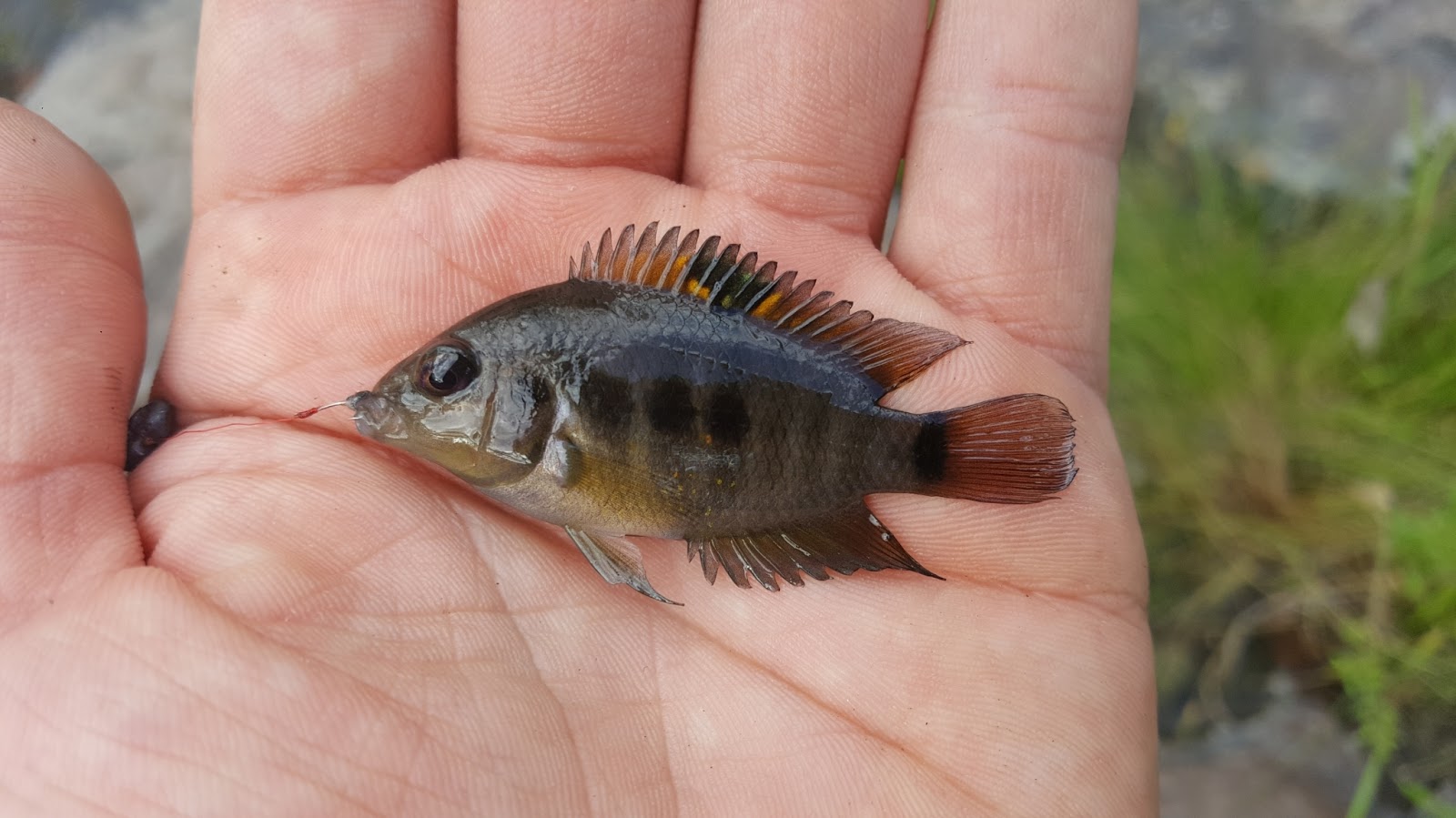 |
| Honduran Redpoint Cichlid |
 |
| Executioner Wasps |
Alex and I had split up while I was fishing, and I could not find her for about 20min after returning to the fishing hole. Turns out she was only just out of sight, but it sure isn't fun to lose the only person you know in a foreign country where no one understands you! Anyway, after that whole debacle, we returned to Bagaces where we visited the supermarket for some local treats before cleaning up at the hotel and going back out to look for dinner. Costa Rica has these restaurants called "sodas" that are basically your small local restaurants. The main meal is called "cassados" and usually seems to consist of your choice of meat, rice, black beans, a salad, and plantains. We found Soda la Fuente on a slightly sketchy street but the waitress was friendly and the place looked clean. The food costs us less than $5 each and was delicious!
 |
| <$10 of Cassados! |
Dinner pretty well ended the night as we fell asleep soon after returning to the hotel to be ready for another early day. We rose at 5:30 again and continued heading north, this time to Rio Celeste. There was no fishing allowed in the park, but it was still totally worth the visit! The river has a beautiful blue colour caused by a chemical reaction between two smaller clear streams, and you can even hike to the point where the reaction occurs. There was also tons of wildlife, some small hanging bridges, and a huge waterfall.
 |
 |
The hike along Rio Celeste took us about 2.5hrs and we then drove to a section of the river just outside of the park where we could swim/fish in the blue water. I only caught Tetras and the water was pretty cold but some White-throated Capuchins came right up to us!

After finishing up the river, we began the drive to our next major destination: the town of la Fortuna. Along the way, we were treated to some spectacular views of the Arenal Volcano, better than any we'd see while much closer to the volcano.

Once in la Fortuna, we searched for our next hotel and settled on la Choza Inn. They had small, but clean, rooms, beautiful grounds, and free breakfast! All for $35! We also took a bit of time to explore the town and buy some fried plantain and ice cream.
 |
| Kitchen Area |
 |
| The Grounds |
The next activity was a dip in a river naturally heated by the volcano. Resorts all around took advantage of the natural hot springs but the river could be accessed for free at the right spots. We found the right location and enjoyed the hot water and jungle surroundings for a while. We then continued down the road past where the tourists go until we hit a river crossing where the car wouldn't make it across, and stopped at some fishing spots along the way. Unfortunately, nothing of interest came to hand but we still enjoyed our adventure and were treated to some nice views :)
 |
| River crossings in CR are pretty intense! |
That pretty well ended day 3, and brought us to the final day of our mini road trip. We rose extra early to have this cool swimming hole I had heard of to ourselves, called el Salto. I started by fishing at the spot because it looked so fishy, and was rewarded with one of my top targets for the trip: the Machaca. More specifically, the one I caught was a Machaca del Atlantico. They're a sort of river-dwelling version of a Piranha, but with teeth like a Pacu. After fishing, we also took time to use the rope swing, which was much higher than it looks.
 |
| Machaca del Atlantico |
 |
| el Salto Rope Swing |
After our exciting morning, we returned to the hotel for (free) breakfast and then headed to our first set of fishing spots for the day. I had found a promising river on iNat and noticed a few others nearby that also looked like they could be good. As it turns out, all of them were great! Beautiful clear water despite the agriculture in the area and nice deep pools right by the bridges :) I caught more Guapote and Astyanax orstedii at each spot, some bigger Machaca, and a lifer Pastel Cichlid! Just watching the fish in the clear jungle pools was worth it though.
 |
| Bigger Machaca |
 |
| Pastel Cichlid |
That bit of fishing rounded off the morning and we started heading south for our last stop before making it back to Matapalo. We wound our way up the steep mountain roads to get to one of CR's tallest and most scenic waterfalls: del Toro! We couldn't swim under this one but the hike down was fun and the waterfall and surroundings were beautiful.
 |
 |
After leaving del Toro, the rest of the day was simply devoted to making our way back to Alex's sister's place, made difficult by the rough mountain roads. Slowly but surely, we made our way back and were treated to epic mountain landscapes and a beautiful sunset along the way.