The Richelieu River is arguably the best multi-species fishing river in all of Quebec. Although it has a slightly shorter list of species than the massive St-Lawrence River, it is generally more accessible and still boasts at least different 75 species! By my count, 36 of these are feasibly catchable in the river by any angler, maybe even more if you're more dedicated than I am. Importantly, all Redhorse are considered protected species in this river and must be immediately released if accidentally captured!
I would call it a medium-sized river, flowing 124km from its source at the northern end of Lake Champlain, and dumping into the St-Lawrence. It averages around 300m in width, meaning it is (mostly) safe to fish from almost any watercraft, and that a good portion of it can be covered from shore. However, there are a few sections of rapids to watch out for!
I'll divide the river into three sections for the purpose of this summary: the Upper Richelieu (from Lake Champlain to St-Jean-sur-Richelieu), the Middle Richelieu (from where the river narrows near Sainte-Anne-de-Sabrevois to Chambly), and the Lower Richelieu (from Chambly to the St-Lawrence). I will also describe the fishing in some of its major tributaries.

The Upper Richelieu
Main Species of Interest: Rudd, Bowfin, Northern Pike, Largemouth Bass, Panfish, and Redfin Pickerel for those who dare.
This is the slower, warmer-water portion of the river; where Bowfin and Northern Pike are king, and many other interesting species lurk in the weeds. I fish two main areas in this portion of the river: Noyan and St-Paul-de-l'Ile-aux-Noix.
Noyan:
The Noyan area is mainly accessed via boat, but some shore spots exist as well.
There are two great boat ramps available for a small fee. The first is at Pourvoirie Laramée (45.066794,-73.333404). The owner here is a nice guy, speaks English, and also has the option of boat rentals at low cost. The other boat ramp is located across the river at the Sleepy Hollow campground (45.065217,-73.319382).
Noyan is the place to be if Bowfin are your target species! In the springtime, they can be found in very shallow water along the shorelines in this area, and even up in the flooded forests of the islands in the area. I mainly target them by sight-fishing with jigs, keeping the lure directly in front of the fish until they react. I sometimes find it necessary to downsize to panfish jigs or use faster moving lures such as spinnerbaits if the fish are being finicky. Note: cutbait or baitfish of any sort are not permitted as bait in QC, so keep that in mind!
Besides Bowfin, the area also has good Northern Pike and panfish (Pumpkinseed, Bluegill, Yellow Perch) fishing. These can all be found in and around the weedy areas, especially along the weedline in the case of Northern Pike. I like using anything flashy for Northern Pike; spoons, spinners, and spinnerbaits all work well. Small jigs or worm rigs will work well for the panfish.
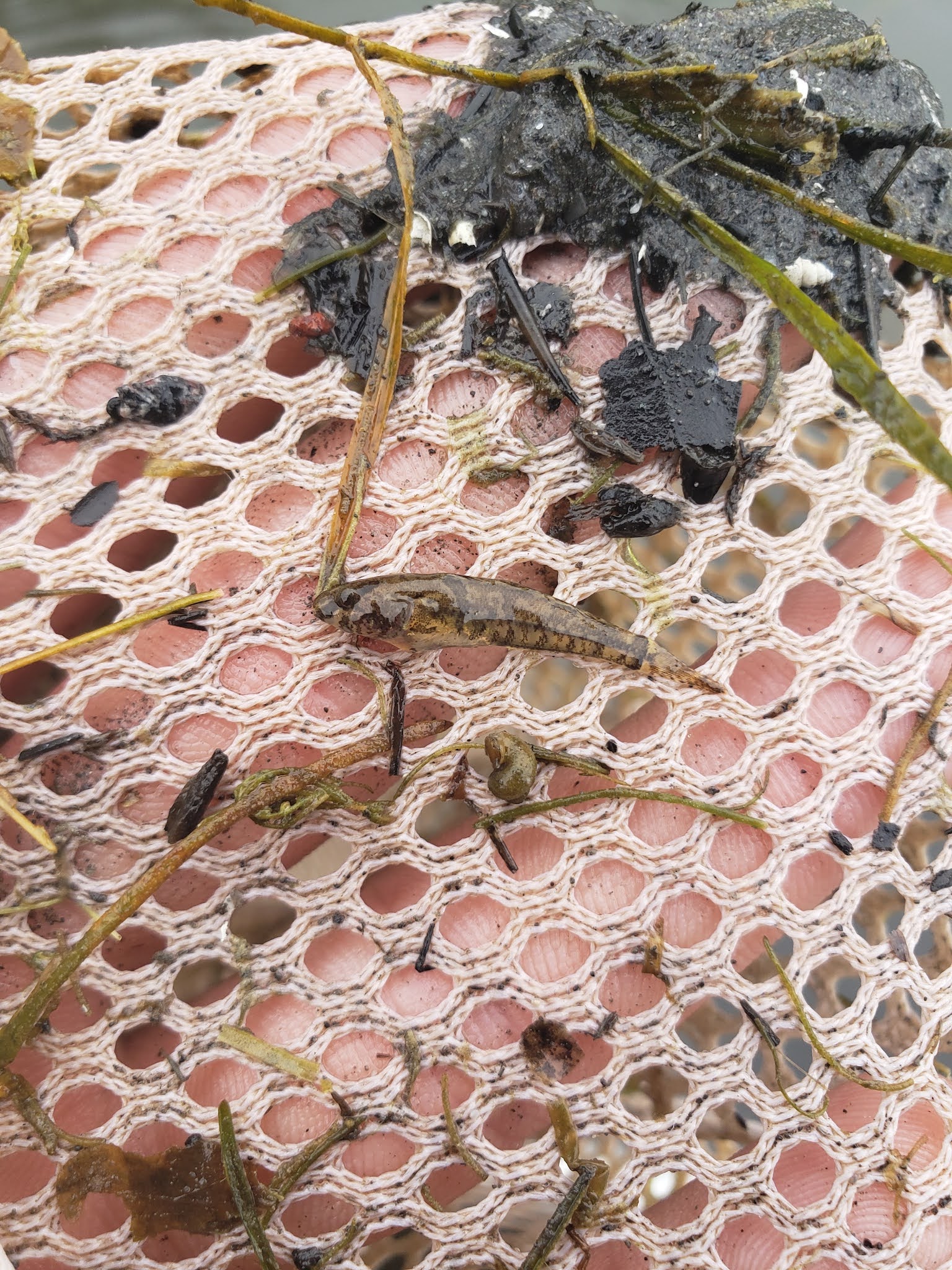
A variety of other species can be caught here as well, including Walleye, juvenile Rudd, Longnose Gar, Brown Bullhead, Banded Killifish, Bluntnose Minnow, Golden Shiner, and Johnny/Tessellated Darter. I haven't spent much time targeting most of these in this particular area, but the Walleye tend to hang out in the channel where there is more current. All of the others can be found in the shallower areas around the weed beds.
St-Paul-de-l'Ile-aux-Noix:
St-Paul-de-l'Ile-aux-Noix is another area that is best accessed by boat, but also has a couple shore spots and is a popular ice fishing destination. The main shore fishing area is a pier located directly beside the boat ramp at Pourvoire Guy Mayer (
45.132554, -73.267345). The owner of the ramp speaks English and used to be a commercial fishermen so knows a lot about some of the more obscure species in that area. Ice fishing in the area primarily happens on the man-made canals on the west side of the river.
This area is your best bet if Rudd are your primary target, but it also offers great panfishing for Black Crappie, Bluegill, Pumpkinseed and Yellow Perch. Largemouth Bass and Northern Pike also show up and slam the ultralight gear. All of these species can be caught using small panfish jigs tipped with a 1-2" plastic or a bit of worm/maggots if they are being finicky. They all seem to relate to the docks in the canals, with the Crappie sticking tight to the structure and Rudd forming large schools within the marinas and canals.
Northern Pike, Bowfin, Tench, Common Carp, Redfin Pickerel, Bluntnose Minnow, Banded Killifish, and Golden Shiner are also available here. That being said, I would recommend other spots for Bowfin, Tench, Common Carp, and Redfin Pickerel. Walleye can be caught in the main channel of the river.
The canals in St-Paul are also a popular ice fishing area, because they freeze before very early in the season. Northern Pike, Black Crappie, Bluegill, Pumpkinseed, Yellow Perch, and Golden Shiner can all be targeted through the ice here.
The Middle Richelieu
Main Species of Interest: Copper Redhorse, Freshwater Drum, Walleye, Smallmouth Bass.
This central portion of the river is the one I have explored least, and seems to have the lowest diversity. Nevertheless, it may still hold some secrets I have yet to discover! I've fished two areas in this section: St-Jean-sur-Richelieu and the Chambly rapids. This is also the most dangerous section of the river, with many sets of rapids and rocky shoals.
St-Jean-sur-Richelieu:
There is a good shore fishing/wading access to this part of the river located at Parc Martial-Bessette (45.326692,-73.256561). Channel Catfish and Brown Bullhead can be caught on bottom rigs, as well as large Freshwater Drum out in the faster water. There is also a free boat launch with ample parking beside the "Le Nautique" Marina (45.302313,-73.250436).
Chambly Rapids:
The Chambly rapids are the last stronghold of the mythical Copper Redhorse! Targeting them is obviously completely illegal, but it's still a fun place to visit and see the many interpretive signs describing the plight of Quebec's only endemic fish, and one of the rarest fish in North America. There are many sanctuaries in this area, so care should be taken in reading up on your regulations before heading here. That being said, the river can be accessed from the shoreline at the town of Richelieu (45.448897,-73.262392). Both shore fishing and wading are excellent techniques here.
 |
| Image Source: Fisheries and Oceans Canada |
Channel Catfish will be the most common intruder hitting your bottom rigs, but the occasional Brown Bullhead, Smallmouth Bass, Walleye, Rock Bass, or Fallfish may show themselves. Smallmouth Bass and Walleye are typically the main targets when wading and casting, and fly fishing is also quite successful in this faster part of the river. Some more unlikely catches here include: Longnose Gar, Brown Trout, Rainbow Trout, and landlocked Atlantic Salmon (locally known as Ouananiche).
The Lower Richelieu
Main Species of Interest: Tench, Mooneye, Lake Sturgeon, Burbot, Common Carp, Longnose Gar, White Perch.
The Lower Richelieu is potentially my favourite section of the entire river. There are many accessible shore fishing spots, all offering some pretty great roughfishing! Two of my favourite spots are the Chambly Basin and the historical locks in St-Ours. However, there is also a lot of great fishing along the shores of the towns of Otterburn Park, St-Hilaire, and Beloeil.
Chambly Basin:
The Chambly basin starts at the base of the the Chambly rapids and is a bizarre widening of the river, almost more like a lake. This area is best fished by boat, but you need to stay back from certain areas designated as sanctuaries for the Copper Redhorse. The town of St-Mathias-sur-Richelieu offers the closest free boat ramps and parking (45.475205,-73.271337).
My favourite part of the basin is at the base of the rapids, where I can anchor my boat and bottom fish for a huge diversity of rough fishes. I've found a simple slip-sinker rig with 2-3oz of weight to be most effective. The Smallmouth Bass and Channel Catfish are incessant, but, with enough patience, you'll eventually run into Lake Sturgeon, Freshwater Drum, Mooneye, Walleye, and American Eel. All 5 species of Redhorse in QC can also be found here, but are all protected so must be immediately released.
The calmer, shallower bays of the basin also have some great fishing for the more "swampy" species like Longnose Gar and Northern Pike.
St-Ours Historical Locks:
I've probably spent more time fishing here than anywhere else. It arguably has the best Tench fishing in North America, and so many other cool fish too! Channel Catfish, Brown Bullhead, Common Carp, and Yellow Perch are also common, but many other rarer fish are possible too. Burbot and juvenile Lake Sturgeon are not uncommon during the colder shoulder seasons, and big schools of Mooneye show up randomly as well. Fishing high-low and slip-sinker rigs are some of my favourite methods of catching Tench, and dragging a high-low rig on the current seam is good for Mooneye.
A secondary spot here is the fast current below the dam just west of the locks. It's a great spot for catching hundreds of White Perch, but there are also big Channel Catfish, Lake Sturgeon, Walleye, Sauger, and Striped Bass at the right times of year. However, Striped Bass are protected in this part of QC so cannot be targeted until further notice.
Beloeil Shore Fishing:
This is yet another great area for the avid shore fisherman, with so many accesses offering great fishing. There's the Halte Routiere in Otterburn Park (45.545392,-73.210424), the current seam across from Capitaine Pouf in Beloeil (45.5488124,-73.211610), and the boat ramp in St-Hilaire (45.563509,-73.199544).
I have recently discovered that Otterburn Park is a great Common Carp spot if you know the right techniques. It's not obvious, but the large bend in the river forms a sort of bay with low current, providing perfect Carp habitat. I like baiting with a mixture of panko bread crumbs, strawberry Jell-O powder, and sweet corn. I use sweet corn as my hook-bait and cast often when I first show up to get the fish feeding. All that being said, this is a decent spot to bottom fish with nightcrawlers for multi-species as well.
The next spot has much faster current, and can be difficult to fish without 4oz sinkers. The current seam just downstream from the train bridge and by Capitaine Pouf is another good spot to try from shore. Big Lake Sturgeon swim through this area and can put up pretty incredible fights in the current. River, Silver, and Shorthead Redhorse are also more-or-less common but must not be targeted as they are protected. This spot also has a spectacular view of the St-Hilaire Mountain, best appreciated when the leaves change colours in the fall.
Finally, the boat ramp in St-Hilaire has a nice open area to fish and has the advantage of being able to move under the bridge if it starts raining. Tench, Redhorse, and Channel Catfish are all occasionally caught here, but the quality at this spots seems to have gone down in recent years.
The Tributaries
Main Species of Interest: Greater Redhorse, Shorthead Redhorse, Silver Redhorse, Common Carp, Bowfin, Eastern Silvery Minnow, American Eel, Quillback, Tench, Rosyface Shiner.
The Richelieu has a ton of tributaries, but there are 3 main ones I think are worth mentioning; the Sud River, the Acadie River, and the Hurons River. Unfortunately, all three struggle with agricultural runoff, but the fishing still manages to be pretty good at the right time of year. I recommend avoiding the summer months as this is when the worst of the eutrophication takes place. Access is difficult to most of these rivers, but I'll add coordinates for the best spots I've found.
Sud River:
The Du Sud is a weird river, almost a set of linear swamplands. Access is limited, but one of the best areas I've found is at an agricultural drainage weir by Chemin Beech N (45.101123,-73.192277). This area is shallow, but you have to be careful because the dam weir floodgates seem to open without warning so levels can rise fast! This is the best spot I've found for Eastern Silvery Minnow, but they seem to only show up in the fall. At this time of year, they show up in huge numbers and are easily caught by tanago hook. This is also a good spot for observing juvenile Bowfin.
The larger sections of the river further downstream are apparently great spots for many warmwater species like Common Carp, American Eel, and Brown Bullhead when they move up to shallow water to spawn in the spring.
Acadie River:
I've had pretty bad luck fishing this river and it's tributaries, so I won't offer any coordinates because I feel that the average angler could figure out something better than what I have to offer. It's a shallow and silty river, which may explain why I have trouble fishing it. That being said, it has some decent pools for Carp fishing and the few riffles I've found have had great micro-fishing for common species such as Creek Chub, Banded Killifish, and Common Shiner.
Hurons River:
For those of you that have read this far into this summary, here is your reward. I've kept this spot semi-secret for a while now, and it is one of my favourites. It can be accessed by boat from the Chambly basin if your rig can tolerate shallow water, or by descending a steep bank from the Shell on Chemin Richelieu (45.459269,-73.257062).
 |
| Image Source: Alexis Desmarais |
Spring is the time of year you want to be here. The river gets runs of Longnose Gar, Common Carp, Shorthead, Silver, and Greater Redhorses, and the mythical Quillback. Some of those also stick around for the rest of the year, and are joined by warmer water species such as Tench, Northern Pike, and Smallmouth Bass.
My favourite way to target Longnose Gar is at night with flashy spinners. The unconventional technique consists of lightly twitching the spinner blades under the beam of your headlamp, right next to the snout of the Gar. Usually, it will see this as the flash of a small shiner and swipe at your bait! Set the hook hard and bring it to shore fast before it gets off.
The Redhorses also put up great fights in the current here, I recommend targeting them during the spawn in the riffle area around the Route 133 bridge. Whatever rig you think will best present a worm to them in the fast current is best. When they're feeding up there, they'll often hit anything you can get in front of them and tear off downstream!
Let's not neglect the legendary Quillback, a Carpsucker species with a reputation for being dificult (if not impossible) to catch fairly. They do make a run up into this river, but only for a very short period of the year. In fact, I've only seen them here twice! Prior experience recommends using the most subtle worm rig you can think of, but you'll still need a huge amount of luck to get one.
Finally, this is a great place to get into micro fishing. It has all the common species such as Mimic Shiner, Spotfin Shiner, Bluntnose Minnow, Johnny/Tessellated Darter, and Creek Chub, but also gives you a chance at some tough species such as Longnose Dace and Rosyface Minnow.
Conclusion:
The Richelieu River is a very special place, and, in my opinion, has the best fishing in all of Quebec. At the very least, it certainly offers the best rough fishing in all of Quebec. I would also argue that it has the best Tench fishing in North America, and would have the best Redhorse fishing in Canada is it was allowed. Although it struggles with urban and agricultural pollution, and erosion from large boats, I hope that others can see how important this river is, and how it needs more protection. I've spent thousands of hours here, and I hope to spend many, many more.